Another aspect of writing I enjoy is reviewing music. This is something I wrote after Neil Peart of Rush passed away.
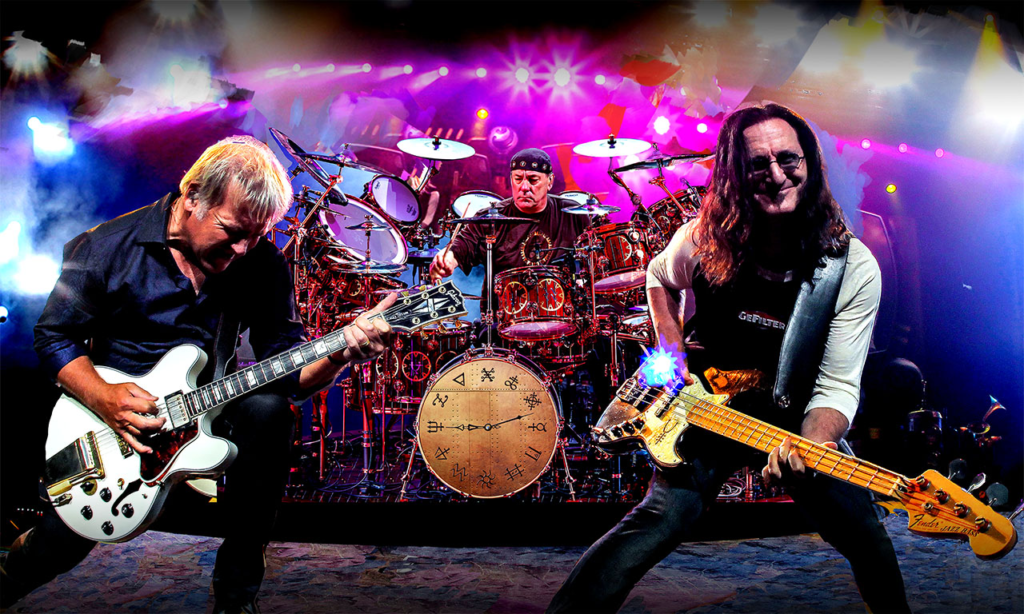
After drummer Neil Peart passed away in January 2020, I re-listened to all of Rush’s 19 studio albums and ranked them from best to worst. To be succinct, I tried to keep most album reviews to no more than three sentences. I created a short 6 hour Spotify Playlist as well with three key tracks from every album. Ranking the albums was really difficult as I like every single song on albums that ranked in the Top 9 of my list. The main takeaway from re-listening to every Rush album again from start to finish–some I had not heard in quite a while–was that there’s really not a bad Rush album, just a few that have some weak parts here and there. Fellow Rush fans, let me know what you think! If you’re not a fan, check out the Spotify playlist if you’re in the mood to try something new.

19. Rush (1974) – Debut album is the sound of a super young band showcasing their musical chops over Zeppelin-inspired hard rock. Half of it is good, and half is mostly forgettable. “Finding My Way,” “What You’re Doing” and “Working Man” hold up really well. Key Tracks: Finding My Way, What You’re Doing, Working Man

18. Fly By Night (1975) – The addition of Peart made their Zeppelin-esque rock more palatable than on their debut, but there are still a few songs (“Rivendell,” “Making Memories”) that are best left forgotten. The very best tracks (“Anthem,” “By Tor and the Snow Dog,” and the title track) are probably the best things they did on their first three albums. Key Tracks: Anthem, Fly By Night, By Tor and the Snow Dog

17. Test for Echo (1996) – There is a lot of good *music* on this album, but very few compelling songs. Perhaps as a result of coming out in the mid-90s crime TV wave and during the dawn of the internet, Peart’s lyrics on both topics have not aged well at all (“tough talking hood boys” on the title track, “net boy, net girl” on “Virtuality” are some unfortunate examples). Always felt this album was like Rush on auto-pilot: sounds like Rush, but just doesn’t have the usual magic. Key Tracks: Test for Echo, Driven, Totem

16. Roll The Bones (1991) – One of the band’s favorite albums from all accounts, and it’s probably because the songwriting is very good on tracks like “Dreamline,” “Bravado,” and “Ghost of a Chance.” But Geddy Lee’s super restrained vocals on a few too many middle-of-the road songs like “Heresy,” “Face Up,” and “You Bet Your Life” makes this come off as pretty lifeless most of the time. Key Tracks: Dreamline, Bravado, Ghost of a Chance

15. Caress of Steel (1975) – Certainly the most interesting of their first three albums. 1st half is pretty much the same as their first two albums with heavy riffs & Geddy Lee wailing all over the place; the final two lengthier songs feature some nice parts and good jams but carry a bit too much of a Dungeons and Dragons vibe (“Enter the champion, Prince By-Tor appears to battle for freedom…” the narrator intones at the end of “The Necromancer.”) to be taken all that seriously. Key Tracks: Bastille Day, Lakeside Park, The Fountain of Lamneth

14. Hold Your Fire (1987) – The apex of Rush’s use of keyboards, and most of it works fairly well in combination with their most mature set of songs up until that point. “Force Ten” and “Open Secrets” are really evocative, and “Time Stand Still” and “Mission” are two of the band’s best songs. Bogged down overall by the forgettable closers “Tai Shan” and “High Water.” Songs like “Lock and Key” and “Prime Mover” aren’t necessarily bad but feel derivative of what they had already been doing on their previous few albums. Key Tracks: Force Ten, Time Stand Still, Mission.

13. Counterparts (1993) – Grunge’s influence was clear. Rush rebooted itself in 1993 with this album, reaffirming their hard rock roots with their heaviest set of riffs in over a decade. A pivotal album that helped take Rush to the next level when other 70s bands at the time were moving in the exact opposite direction. Key Tracks: Animate, Stick It Out, Cut to the Chase

12. Clockwork Angels (2012) – Rush’s last album does everything you could hope for: recapture some of the magic from their early days (lengthy, heavy instrumental breaks) but also move forward and remain relevant by incorporating a modern production approach. “The Garden” contains probably the most beautiful (and atypical) music in their catalog; wonderful that they were able to achieve this on the last song on their last album. Key Tracks: Seven Cities of Gold, Headlong Flight, The Garden

11. Vapor Trails (2002) – Coming after his personal tragedies, these are some of Peart’s most personal lyrics (“Carry all those phantoms/through bitter wind and stormy skies/from the desert to the mountain/from the lowest low to the highest high/like a Ghost Rider” from the song of the same name which recounts his motorcycle journey/escape through North America after the death of his daughter and first wife). Musically, every song has a really strong cohesiveness, which amplifies the weight of the material. Arguably, their most important album in that it was one that seemed unlikely to ever get made. Key Tracks: One Little Victory, Ghost Rider, Secret Touch

10. Snakes and Arrows (2007) – Rush’s last three albums are all really close in quality so it’s hard to rank them. Here they add some more textures to songs than they had done on Vapor Trails which makes it one of their more diverse later albums. Lifeson’s guitar work throughout is really strong, but especially on the indian-tinged about-to-go-off-the-rails playing on the killer closer “We Hold On.” The Rush albums from the 00s probably suffer from having one or two too many songs that just are clunkier than all the rest. Key Tracks: Workin’ Them Angels, Spindrift, We Hold On

9. Permanent Waves (1980) – The transition between the late 70s prog Rush and early 80s hard rock/new wave Rush. Even though there’s a lot to like about the longer tracks “Jacob’s Ladder” and “Natural Science,” to me, they are the weaker parts of the album; classic rock staples “The Spirit of Radio” and “Freewill” and shorter album nuggets like “Entre Nous” and “Different Strings” serve as the real highlights. Key Tracks: The Spirit of Radio, Freewill, Entre Nous

8. Grace Under Pressure (1984) – Dark, emotional, dystopian album. With the bright new wave influences of “Red Lenses” and “Kid Gloves,” this album seems light years from Hemispheres that had just come out 6 years earlier. Peart’s lyrics are especially vivid throughout (“I remember how we talked and drank into the misty dawn/I hear the voices/we ran by the water on the wet summer lawn/I see the footprints/I remember” from a song about personal loss “Afterimage” to “I clutch the wire fence until my fingers bleed/A wound that will not heal, a heart that cannot feel,” from “Red Sector A” detailing the life of a holocaust prisoner). Pretty powerful album from start to finish. Key Tracks: Afterimage, Red Sector A, Between The Wheels

7. Power Windows (1985) – My favorite of Rush’s mid-80s keyboard-heavy albums. The arrangements of the songs are really good. The Guitar solo on “The Big Money” is just as good as the ones on “Limelight” and “La Villa Strangiato.” Love the energetic, inspirational vibe of “Grand Designs” (“Against the run of the mill/static as it seems/we break the surface tension/with our wild kinetic dreams”), and “Manhattan Project” is expertly produced and arranged. “All this machinery making modern music can still be open-hearted…” Considering the mid-80s recording technology and synthesizers were in full swing at the time, Rush managed to maintain a pretty sincere and tasteful approach here. Key Tracks: The Big Money, Grand Designs, Mystic Rhythms

6. A Farewell to Kings (1977) – From a progressive rock standpoint, Rush took a big step forward here from 2112. Out of all of their songs from this period, “Xanadu” probably comes closest to matching the prog heights of their heroes Yes and Genesis. The rest of the album is a great mix of hard rock and some softer songs like “Madrigal” and “Closer to the Heart.” It would be a few decades before they’d get as heavy again as they do on closer “Cygnus X-1.” Key Tracks: Xanadu, Closer to the Heart, Cygnus X-1

5. Hemispheres (1978) – While perhaps not as strong as 2112, this contains their most interesting progressive rock compositions – even the short “Circumstances” has that really nice proggy middle section. Geddy Lee at his screechiest in parts, and yes, some sections are certainly silly, but it all makes for a glorious late 70s noise. 2112 and A Farewell to Kings had been building to this, and then the band realized wisely it was time to transition to a more modern sound with Permanent Waves two years later. Key Tracks: Cygnus X-I: Book II, The Trees, La Villa Strangiato

4. Signals (1982) – Pretty perfect album from start to finish. “The suburbs have no charms to soothe the restless dreams of youth…” may speak to more hardcore Rush fans than any other lyrics in their catalog. The deep cuts on this album like “The Weapon” and “Losing It” are really, really good. Amazing guitar solo in the former, amazing electric violin (!) solo in the latter. Like Permanent Waves and Moving Pictures, Peart’s lyrics and songwriting continue to evolve into more mature and polished compositions. Key Tracks: Subdivisions, The Analog Kid, Losing It

3. 2112 (1976) – The title track is perfect, and the other 5 tracks aren’t so bad either. The sound of a very young band loudly proclaiming they are going to be a force to be reckoned with. Key Tracks: 2112, A Passage to Bangkok, The Twilight Zone

2. Moving Pictures (1981) – “Tom Sawyer,” “Red Barchetta,” “YYZ,” and “Limelight” – quite a murderer’s row of classic songs to kick off an album; my guitar teacher when I was a kid joked that when he got this album it took him months to realize there was a second side because all he would do was listen to the first side over and over. Almost 40 years later, this album just *sounds* great. “Red Barchetta” stands as one of the band’s best; Peart’s lyrics are some of my favorites as they could also be read as a short story (“My uncle has a country place that no one knows about/he says it used to be a farm before the Motor Law…”). Key Tracks: Tom Sawyer, Red Barchetta, Limelight

1. Presto (1989) – Sometimes the album that gets you into a band winds up becoming your favorite, so that may be true for me with Presto which was my gateway into Rush when I was 13, but I ultimately pick this as my favorite because as a songwriter, this is in my opinion the most interesting, tasteful and classy set of songs they ever released. Like movies, sometimes the best albums are those that are great overall, but also just have a ton of awesome little moments in them. There are so many on this album – the seemingly endless opening riff of “Show Don’t Tell,” the sound of the keyboards that come in at 1:38 on band-favorite “The Pass,” the way Geddy Lee sings “pleasure leaves a fingerprint as surely as mortal pain” after the bridge in “Scars,” some of Peart’s finest and evocative lyrics on the title track (“I had a dream of a winter garden/a midnight rendezvous/silver, blue and frozen silence/what a fool I was for you”), the urgency of the chorus of “Available Light”–I could go on and on about why I love this album and that’s why it’s my #1. Key Tracks: Show Don’t Tell, The Pass, Presto
Definitive Rush Playlist:
https://open.spotify.com/playlist/27dUijWaP7svHiGLrjzYnc?si=hPxm9mhnRAieJwM7z-K-MA